Welcoming a new baby is often described as one of the most joyful experiences in a woman’s life. However, for many mothers, this period is unexpectedly overshadowed by profound sadness, exhaustion, and emotional numbness. If you are experiencing these feelings, it is vital to hear one resounding truth: you are not alone, it is not your fault, and you are experiencing a recognized, highly treatable medical condition known as Postpartum Depression (PPD).
The intense hormonal fluctuations, sleep deprivation, and psychological shifts that follow childbirth can take a significant toll on a mother’s mental health. While traditional therapies and medications have long been the standard of care, they do not work perfectly for everyone. For mothers seeking an alternative innovative psychiatric treatments offer renewed hope.

For residents of the Greater Milwaukee area, Associated Mental Health Consultants (AMHC) is dedicated to providing clinical excellence infused with deep empathy. We understand the unique vulnerabilities of the postpartum period, and our multidisciplinary team is here to guide you toward lasting wellness using advanced, evidence-based interventions.
First-Line Treatments: The Safety and Efficacy of Antidepressants
When treating postpartum depression, traditional oral antidepressants combined with psychotherapy remain the gold standard and first line of defense. It is critical for mothers to know that these medications are highly effective and have been extensively documented to be safe for both the mother and the breastfeeding infant.
Ethically and medically, no woman should hesitate to start an antidepressant if she is struggling with PPD. These medications can work quickly to stabilize neurochemistry, which is absolutely essential during the time-sensitive early months of motherhood. Rapid relief ensures that a mother can safely care for her newborn, foster a strong emotional attachment, and regain her own sense of self. Our psychiatric prescribers work closely with new mothers to select the safest, most effective pharmaceutical options to support their nursing and recovery goals.
TMS Therapy for Postpartum Depression in Wisconsin
While antidepressants are safe and effective for the majority of women, psychiatric care is not one-size-fits-all. Some mothers may find that their symptoms stubbornly persist despite following standard treatment protocols.
Transcranial Magnetic Stimulation (TMS) is specifically indicated for postpartum mothers who have already tried at least two antidepressant medications without success, or for those who have only experienced a partial response to these first-line treatments. If you fall into this category, TMS Therapy for Postpartum Depression in Wisconsin serves as a powerful, FDA-cleared alternative to help you break through the barriers of treatment-resistant depression.
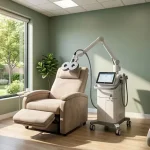
TMS is a non-invasive medical treatment that uses highly focused magnetic pulses—similar to the technology used in an MRI machine—to stimulate specific areas of the brain that regulate mood. In patients suffering from clinical depression, the neural pathways in the prefrontal cortex often become underactive. TMS gently and precisely targets these dormant areas, essentially “waking up” the brain’s natural mood-regulating functions.
The Unique Benefits of TMS for Treatment-Resistant PPD
For mothers who have not fully responded to two or more antidepressants, TMS offers a completely different mechanism of action with distinct benefits:
-
Completely Non-Systemic: Because TMS is a localized physical therapy that does not circulate through the bloodstream, it cannot be passed to an infant through breast milk.
-
Zero Medication-Related Side Effects: TMS bypasses the digestive system, avoiding the systemic side effects sometimes associated with switching to stronger psychiatric medications, such as significant weight gain, severe fatigue, or cognitive fogginess.
-
Outpatient Convenience with No Downtime: A typical TMS session at our Milwaukee-area clinic lasts roughly 20 to 30 minutes. The treatment requires no anesthesia or sedation. You remain fully awake and alert during the procedure, can drive yourself home immediately afterward, and can seamlessly return to caring for your baby.
A Comprehensive, Multidisciplinary Approach at AMHC
At Associated Mental Health Consultants, we know that healing is rarely a single, isolated intervention. Whether you are beginning a first-line antidepressant or exploring TMS after previous medications have failed, our treatments work best within a comprehensive architecture of care.
Our clinic houses a collaborative team of psychiatric prescribers and experienced therapists. We offer counseling for adults, adolescents, and children, ensuring that the entire family system is supported during transitional periods. Pairing standard medication or advanced treatments like TMS with targeted psychotherapy—such as Cognitive Behavioral Therapy (CBT)—provides a safe space to process the massive identity shift of motherhood while stabilizing the biological neurochemistry of the brain.
Furthermore, AMHC is a regional leader in advanced therapeutics. In addition to TMS, our prescribers have years of experience administering other breakthrough treatments for treatment-resistant depression, including intranasal esketamine (Spravato) and Vagus Nerve Stimulation (VNS).
Removing Barriers to Advanced Mental Healthcare
Navigating the healthcare system while dealing with a newborn and postpartum depression can feel insurmountable. AMHC is committed to removing these barriers.
Many new patients are surprised to learn that advanced treatments like TMS are typically covered by commercial insurance and Medicare for patients who meet the criteria for treatment-resistant depression (typically defined as failing two or more antidepressant trials). Our dedicated administrative staff specializes in working directly with insurance providers. We handle the complexities of benefits verification and prior authorizations, allowing you to focus entirely on your recovery.
Taking the First Step Toward Healing
You do not have to lose the early months of your child’s life to the shadows of postpartum depression. It is a medical condition, not a reflection of your character, and highly effective help is available right here in Wisconsin.
At Associated Mental Health Consultants, we are ready to partner with you on your journey back to yourself. If you are struggling with postpartum depression and want to explore our first-line treatments or see if TMS therapy is the right next step for you, visit us at www.amhcon.com or contact our Milwaukee-area clinic to schedule a comprehensive evaluation.
Frequently Asked Questions (FAQ)
Are standard antidepressants safe to take while breastfeeding? Yes, traditional oral antidepressants are the first-line treatment for postpartum depression because they are highly effective and have been heavily researched and documented to be safe for both mother and baby during breastfeeding. They can act quickly to provide the relief necessary for a mother to care for her infant, and no woman should hesitate to discuss starting them with her provider.
Who is a candidate for TMS therapy for postpartum depression? TMS is specifically indicated for mothers suffering from major depressive disorder who have not found adequate relief after trying at least two different standard antidepressant medications, or who have only experienced a partial response to those first-line treatments.
Is TMS therapy safe for breastfeeding mothers with postpartum depression? Yes, TMS (Transcranial Magnetic Stimulation) is generally considered highly safe for breastfeeding mothers. Because TMS uses magnetic pulses targeted specifically at the brain, it is a non-systemic treatment. This means no active pharmaceutical ingredients enter the mother’s bloodstream, guaranteeing that nothing is transmitted to the infant through breast milk.
How long does TMS treatment take for postpartum depression in Wisconsin? A standard course of TMS therapy typically involves sessions five days a week for approximately four to six weeks, followed by a brief tapering period. Each individual session at Associated Mental Health Consultants lasts only about 20 to 30 minutes. Because there is no sedation involved, mothers can immediately resume normal daily activities, including childcare and driving, as soon as the session concludes.
Does insurance cover TMS therapy for postpartum depression in the Milwaukee area? Yes, TMS therapy is widely recognized as an evidence-based medical treatment and is typically covered by most major commercial health insurance plans and Medicare. Coverage generally requires that a patient has a diagnosis of major depressive disorder and has not experienced sufficient relief from previous trials of standard antidepressant medications. The team at AMHC assists all patients with the insurance authorization process.