
Loss alters the architecture of daily life. Whether mourning the death of a partner, coping with the end of a long marriage, processing the loss of physical health, or managing disenfranchised grief, the pain can feel pervasive. While bereavement is a universal human experience, it does not adhere to a predictable timetable or a tidy five-stage checklist
For many individuals in Milwaukee and surrounding communities, grief can shift from natural sorrow into an unremitting state of paralysis or clinical depression. Knowing the distinction between typical bereavement and complicated grief is vital. Professional support provides the clinical framework necessary to process trauma, restore neurological balance, and rebuild a meaningful path forward

Understanding the Landscape of Bereavement
Grief is not merely an emotion; it is an extensive neurological, psychological, and physiological reaction to rupture. The nervous system registers profound loss as a threat to fundamental security, triggering acute stress responses that affect sleep architecture, cognitive processing, immune function, and endocrine balance.
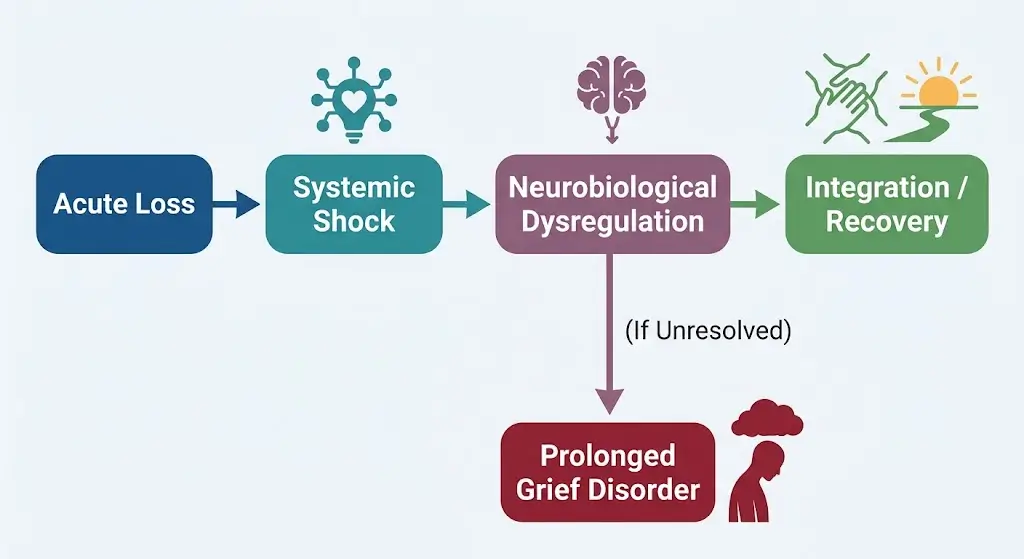
Grief often stems from a variety of profound disruptions:
-
Death of a Loved One: Navigating the absence of a spouse, parent, child, sibling, or close friend.
-
Anticipatory Grief: Emotional mourning that occurs while caring for a loved one with terminal illness or neurodegenerative decline.
-
Disenfranchised & Ambiguous Loss: Grief unacknowledged or misunderstood by society—such as pregnancy loss, estrangement, or caring for someone with advanced dementia.
-
Secondary Losses: Loss of financial stability, social networks, routines, personal identity, or long-term dreams following a significant life disruption.
Grief & Loss Counseling in Milwaukee: When to Seek Help
Because grief is expected after a tragedy, many people endure debilitating symptoms far longer than necessary, assuming their suffering is simply the price of love. While acute sadness is expected, professional intervention becomes crucial when symptoms persist unchanged or escalate over time.
Consider seeking specialized grief counseling if you or a family member experience any of the following clinical indicators:
1. Chronic Emotional Numbness or Intense Disconnection
When emotional blunting prevents you from feeling love, comfort, or attachment to surviving family members, it indicates emotional shock and shutdown.
2. Disruption in Daily Functioning Exceeding Six Months
Struggling to resume vocational duties, neglecting basic self-care, or finding yourself unable to maintain household responsibilities months after the event suggests complicated or stuck grief.
3. Persistent Guilt, Self-Blame, or Reliving Trauma
Compulsive fixation on “what ifs,” relentless survivor guilt, or replaying the circumstances of a loved one’s death are hallmarks of complicated bereavement requiring trauma-informed care.
4. Severe Somatosensory Symptoms
Unresolved grief frequently manifests physically: intractable insomnia, appetite loss, unexplained gastrointestinal distress, tension headaches, and pervasive physical fatigue.
5. Prolonged Grief Disorder (PGD)
Recognized in the DSM-5-TR, PGD occurs when intense yearning, identity disruption, bitterness, and functional impairment remain severe and unsoftened beyond 12 months in adults (or 6 months in children and adolescents).
6. Pervasive Hopelessness or Loss of Purpose
A persistent belief that life has permanently lost meaning, or feeling that you cannot survive without the deceased, warrants prompt psychiatric and psychotherapeutic evaluation.
The Difference: Normal Grief vs. Clinical Depression vs. Complicated Grief
Distinguishing between natural bereavement, major depressive disorder (MDD), and complicated grief requires careful diagnostic skill:
| Characteristic | Uncomplicated Bereavement | Complicated Grief / PGD | Major Depressive Episode (Clinical) |
| Focus of Pain | Specifically centered on the lost individual or role. | Intense yearning, yearning-related anger, preoccupation with the loss. | Generalized emptiness, anhedonia across all facets of life. |
| Self-Esteem | Generally intact; self-worth remains stable despite sadness. | May involve guilt related directly to the loss or death. | Pervasive feelings of worthlessness, self-loathing, or defectiveness. |
| Trajectory | Comes in waves (“grief bursts”); allows for fleeting moments of humor or warmth. | Static, unremitting distress that stays raw year after year. | Constant, persistent dysphoria unaffected by positive external events. |
| Physical Manifestations | Transient fatigue and fluctuating appetite. | Chronic somatic complaints tied to the trauma of loss. | Severe vegetative shifts (marked psychomotor slowing, insomnia, significant weight change). |
Therapeutic Approaches at Associated Mental Health Consultants
Healing from significant loss does not require “forgetting” or severing ties with who or what was lost. Instead, evidence-based therapy helps individuals integrate the reality of loss into their ongoing life story. At Associated Mental Health Consultants (AMHC), our multidisciplinary team tailors care across the lifespan:
Evidence-Based Psychotherapy
-
Cognitive Behavioral Therapy (CBT) & Acceptance and Commitment Therapy (ACT): Unpack maladaptive cognitions (such as unreasonable guilt or catastrophic thinking) while clarifying values to rebuild a purposeful life.
-
Complicated Grief Therapy (CGT): A targeted, 16-session protocol integrating exposure techniques to process the traumatic reality of death alongside restorative tasks to re-engage with daily life.
-
Family and Adolescent Counseling: Tailored interventions helping children and teens who often express grief through behavioral regression, academic decline, or somatic complaints.
Comprehensive Psychiatric Support
When severe grief triggers clinical neurochemical shifts, collaborative psychiatric care can help restore stability:
-
Medication Management: Thoughtful evaluation to treat secondary anxiety, insomnia, or major depressive episodes with pharmacological precision.
-
Advanced Interventions for Treatment-Resistant Depression: When profound grief triggers deep, intractable depression unresponsive to traditional antidepressants, AMHC provides specialized therapies:
-
Transcranial Magnetic Stimulation (TMS): Non-invasive electromagnetic pulses to re-stimulate hypoactive neural circuits involved in mood regulation.
-
Intranasal Esketamine (Spravato): Fast-acting, FDA-approved glutamate-modulating therapy administered under clinical supervision.
-
Vagus Nerve Stimulation (VNS): An advanced neuromodulation approach for long-standing refractory depression.
-
Many of these specialized therapeutic and interventional psychiatric treatments are covered by primary commercial insurance and Medicare.
Local Support: Navigating Grief in the Greater Milwaukee Area
Healing occurs within relationships and community context. For residents in Milwaukee, Waukesha, Ozaukee, and Washington counties, local resources can complement clinical care:
-
Specialized Outpatient Care: AMHC provides psychiatric and psychotherapeutic services serving Greater Milwaukee, Brookfield, Mequon, Wauwatosa, and surrounding suburban areas.
-
Community Grief Networks: Local hospice programs (such as Horizon Home Care & Hospice and Aurora at Home) regularly run community bereavement circles.
-
Child and Teen Loss: Kyle’s Korner in Wauwatosa provides dedicated peer support groups for grieving children and their families.
-
Immediate Crisis Help: If grief becomes unmanageable or triggers thoughts of self-harm, the Milwaukee County 24/7 Crisis Line and the national Suicide & Crisis Lifeline (dial 988) provide around-the-clock emergency stabilization.
Frequently Asked Questions
What is the difference between normal grief and complicated grief?
Normal grief ebbs and flows, with acute pain gradually softening over months as people discover coping strategies and moments of joy. Complicated grief (or Prolonged Grief Disorder) involves relentless, intense yearning, emotional numbness, identity confusion, and functional impairment that persists unchanged beyond 12 months, preventing healthy adaptation.
Can grief cause clinical depression?
Yes. Although bereavement is an expected reaction to loss, it can trigger a Major Depressive Episode, particularly in people with biological vulnerabilities or past trauma. When grief turns into generalized hopelessness, intense worthlessness, and severe vegetative symptoms, clinical depression requires comprehensive psychiatric and therapeutic evaluation.
When should someone seek grief counseling in Milwaukee?
You should seek professional grief counseling if your symptoms interfere with work, school, or basic self-care for more than several weeks; if you feel isolated from support; if you experience persistent guilt or trauma; or if feelings of despair and emptiness do not lessen over time.
Are grief and loss counseling services covered by insurance in Wisconsin?
Yes. Most commercial health insurance plans, including Blue Cross Blue Shield, UnitedHealthcare, Humana, and Medicare, offer mental health benefits covering diagnostic evaluation, individual therapy, family counseling, and psychiatric medication management. Advanced psychiatric therapies such as Spravato and TMS are also frequently covered when clinical criteria are met.
Restoring Balance and Hope
Grief is not a weakness or a problem to be solved; it is the natural consequence of significant attachment. However, you do not have to navigate persistent sorrow, numbness, or clinical depression in isolation. With appropriate guidance and clinical care, emotional pain can soften, allowing you to honor what you have lost while building a healthy, purposeful future.
To schedule a comprehensive evaluation with our multidisciplinary clinical team or discuss personalized therapy and advanced psychiatric care, reach out to Associated Mental Health Consultants at www.amhcon.com.