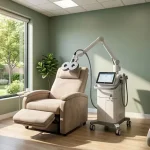
When multiple antidepressant trials and therapy sessions leave depression unresolved, the feeling of exhaustion can be profound. For millions of individuals, standard pharmacological interventions either fail to deliver meaningful symptom reduction or produce side effects that outweigh their clinical benefits. This is known clinically as treatment-resistant depression (TRD).

Hope is far from lost. Interventional psychiatry offers advanced, non-invasive neurostimulation therapies that target depression at its biological root. Among the most well-established of these is Transcranial Magnetic Stimulation (TMS).
Because TMS involves a targeted treatment protocol spanning several weeks, choosing the right clinical team is essential to achieving clinical remission. When finding a TMS psychiatrist near Milwaukee: what to look for and questions to ask becomes your priority, partnering with a clinic that pairs board-certified psychiatric oversight with multidisciplinary care makes all the difference.
Understanding TMS: How It Re-Energizes the Brain
Transcranial Magnetic Stimulation (TMS) is an FDA-cleared, non-systemic, non-invasive treatment primarily used for major depressive disorder that has not responded adequately to medication.
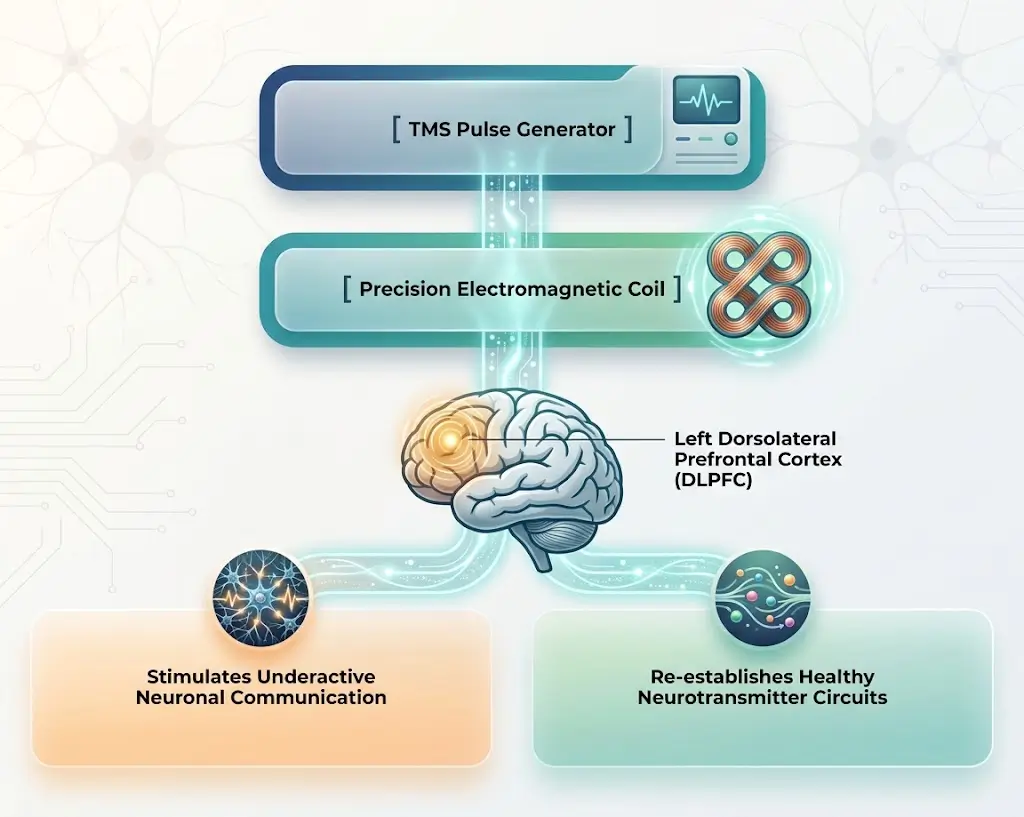
Unlike traditional antidepressant medications that circulate through the bloodstream and can cause systemic issues like weight gain, nausea, or sexual dysfunction, TMS delivers focused magnetic pulses directly to the Left Dorsolateral Prefrontal Cortex (DLPFC). This brain region is chronically underactive in individuals with depression. By stimulating these neural pathways, TMS promotes neuroplasticity, restoring healthy communication between deeper emotional regulation networks over time.
Because treatments are outpatient, require no anesthesia, and carry no cognitive downtime, patients can drive themselves to and from their 20- to 30-minute sessions and immediately resume work, school, or family life.
What to Look for in a Milwaukee-Area TMS Provider
Not all clinics administering TMS operate with the same depth of clinical expertise or continuity of care. As you evaluate practices throughout Southeastern Wisconsin, look for these quality indicators:
-
Board-Certified Psychiatric Leadership TMS is a specialized medical procedure, not merely a device application. Top-tier clinics ensure that psychiatric-mental health nurse practitioners personally conduct the initial diagnostic evaluation, determines clinical candidacy, and then a board-certified psychiatrist performs the baseline motor threshold mapping. The psychiatrist should remain actively involved throughout your treatment cycle to adjust stimulation strength, monitor progress, and review your response.
-
A Comprehensive, Multidisciplinary Practice Model Brain stimulation works best as part of an integrated, whole-person care ecosystem. A stand-alone “TMS bar” that solely sells machine sessions cannot address the intricate facets of mood disorders. Look for practices like Associated Mental Health Consultants (AMHC), where psychiatric prescribers collaborate directly with licensed psychotherapists. This integration ensures your talk therapy, medication management, and neuromodulation work synergistically.
-
Experience with the Full Spectrum of Treatment-Resistant Depression Depression is heterogeneous. If a patient is a borderline candidate for TMS, or requires adjunctive intervention, your clinic should have the clinical acumen to offer or cross-evaluate alternative advanced treatments, such as:
-
Spravato® (esketamine nasal spray)
-
Vagus Nerve Stimulation (VNS)
-
Advanced psychopharmacological optimization
A clinic experienced in multiple interventional modalities ensures you receive the right treatment for your physiology, rather than a one-size-fits-all sales pitch.
-
Insurance Navigation & Transparent Prior Authorization Because TMS typically involves 30 to 36 sessions over 6 to 9 weeks, prior authorization from commercial insurers or Medicare is a crucial administrative step. Choose a provider that actively manages the insurance credentialing process, checks in-network benefits, and provides clear cost estimates prior to your first session.
-
Convenient Access for Milwaukee and Suburban Commuters Consistency is vital for TMS response rates. Missing sessions compromises neuroplastic remodeling. Your provider should be situated with easy access from major thoroughfares (such as I-94 or I-41), serving Milwaukee as well as surrounding communities like Wauwatosa, Brookfield, West Allis, Mequon, and Greenfield.
8 Essential Questions to Ask at Your First TMS Consultation
Before committing to a treatment course, advocate for your care by bringing these questions to your initial evaluation:
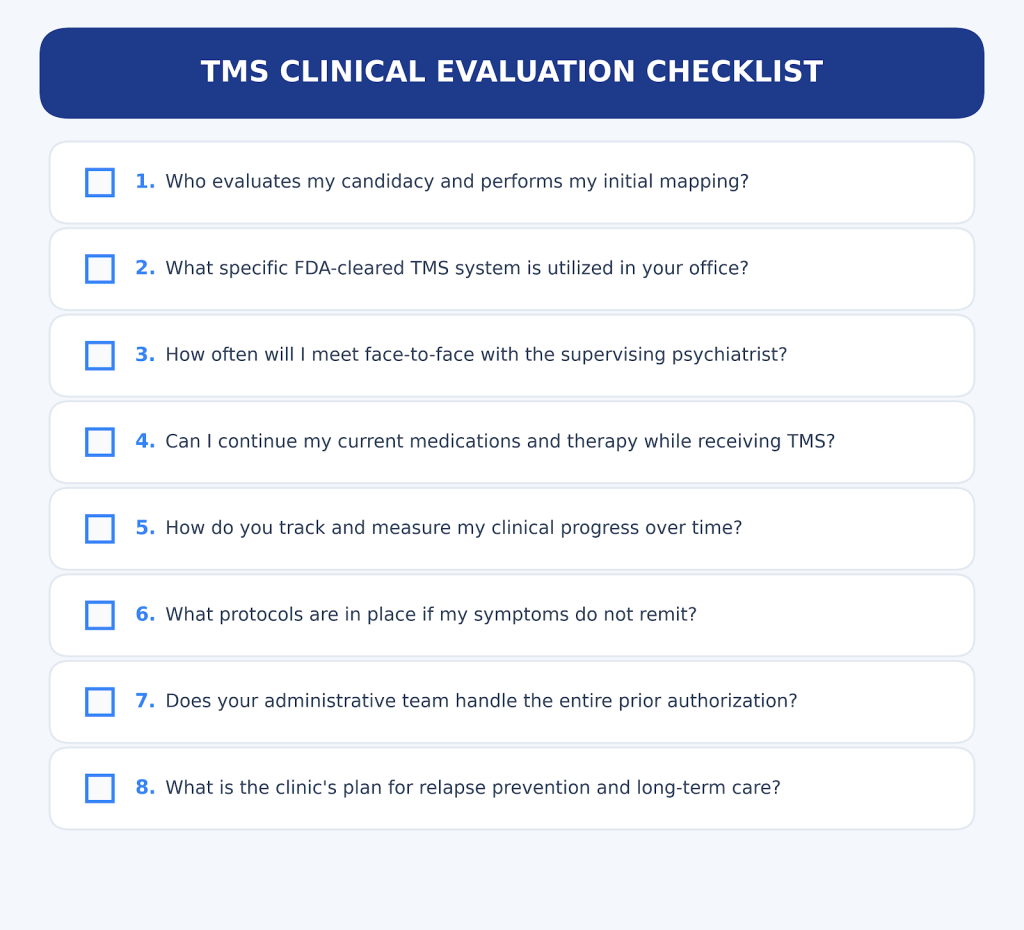
Who evaluates my candidacy and performs my initial mapping?
-
Ensure a board-certified psychiatrist performs your baseline motor threshold test and coil localization rather than delegating this critical diagnostic step.
What specific FDA-cleared TMS system is utilized in your office?
-
Ask about the device platform (e.g., Magstim, MagVenture, NeuroStar, BrainsWay) and ensure the staff is certified in its operation.
How often will I meet face-to-face with the supervising psychiatrist?
-
While a trained TMS technician frequently assists during daily pulse delivery, a psychiatric provider should conduct formal, regular re-evaluations.
Can I continue my current medications and therapy while receiving TMS?
-
In most clinical scenarios, patients maintain their medication regimen and outpatient counseling without interruption. Your psychiatrist will confirm that your medications do not lower your seizure threshold unexpectedly.
How do you track and measure my clinical progress over time?
-
High-standard clinics use validated clinical rating scales (such as the PHQ-9 or MADRS) administered weekly to objectively chart symptom trajectory.
What protocols are in place if my symptoms do not remit?
-
Inquire if the clinic offers step-up care, adjustments to pulse frequency, or alternative interventional options such as Spravato® (esketamine) or VNS.
Does your administrative team handle the entire prior authorization?
-
Ask how long approval typically takes and what documentation from past medication failures they will need from your previous records.
What is the clinic’s plan for relapse prevention and long-term care?
-
A responsible psychiatric practice prepares a plan for post-treatment maintenance, booster sessions if needed, and ongoing psychiatric check-ins.
Comparing Advanced Treatment Options for Depression
When standard antidepressants prove insufficient, understanding how TMS compares with other interventional psychiatric tools clarifies the road ahead:
| Treatment Feature | Transcranial Magnetic Stimulation (TMS) | Intranasal Esketamine (Spravato®) | Vagus Nerve Stimulation (VNS) |
| Mechanism | Focused magnetic pulses targeting the DLPFC | NMDA receptor antagonist enhancing glutamate transmission | Mild electrical pulses to the vagus nerve via an implantable pulse generator |
| Invasiveness | Non-invasive (external magnetic coil) | Non-invasive (nasal spray administered under supervision) | Minimally invasive (surgical outpatient implantation) |
| Anesthesia Needed? | None | None | Yes (only during initial device placement) |
| Session Frequency | Daily (Mon–Fri) for 6–9 weeks | Twice weekly for 4 weeks, then once weekly maintenance | Continuous programmatic stimulation |
| Downtime | None (drive self immediately) | Requires 2-hour clinical observation; cannot drive same day | None once recovered from minor implant surgery |
| Insurance Coverage | Broadly covered by major commercial plans & Medicare | Covered by most major plans with prior authorization | Covered under selective policy parameters |
Frequently Asked Questions (FAQ)
What qualifications should I look for in a Milwaukee TMS psychiatrist?
When choosing a TMS psychiatrist in the Greater Milwaukee area, verify that the physician is board-certified in psychiatry by the American Board of Psychiatry and Neurology (ABPN) and has documented training in neuromodulation. The psychiatrist should personally conduct your baseline brain mapping and motor threshold evaluation rather than delegating the diagnostic phase. Look for a provider embedded in a comprehensive mental health clinic that offers psychotherapy, medication management, and interventional options like Spravato® for coordinated care.
Is TMS therapy covered by insurance in Wisconsin?
Yes, TMS therapy is covered by major commercial insurance carriers throughout Wisconsin (including Blue Cross Blue Shield, UnitedHealthcare, Cigna, and Humana), as well as Medicare, for treatment-resistant Major Depressive Disorder. Most payers require documentation demonstrating that the patient has tried two to four antidepressant medications from distinct classes without sufficient relief, along with a trial of evidence-based psychotherapy. Associated Mental Health Consultants handles insurance verifications and prior authorizations directly.
How does TMS feel, and does it cause systemic side effects?
TMS does not circulate in the bloodstream, meaning it causes no gastrointestinal distress, weight gain, insomnia, or sexual side effects associated with oral medications. During treatment, patients feel a light tapping or clicking sensation beneath the magnetic coil on their scalp. The most common side effect is mild scalp tenderness or a temporary tension headache during the initial week of treatment, which responds well to over-the-counter pain relievers and diminishes as the scalp acclimates.
How quickly does TMS start working for depression?
While neurochemical adjustments begin during early sessions, most patients notice measurable changes in energy, concentration, and mood between weeks 3 and 5 of a standard 36-session protocol. Progress is tracked using standardized psychiatric rating scales to ensure objective gains in day-to-day functionality.
Taking the Next Step Toward Healing
Living with persistent, heavy depression does not mean your symptoms are permanent. The brain possesses an extraordinary capacity to heal and rewire when provided with targeted stimulation.
At Associated Mental Health Consultants (AMHC), our multidisciplinary team of psychiatrists, nurse practitioners, and therapists serves the Milwaukee metropolitan community with compassionate, science-backed care. Whether you are exploring Transcranial Magnetic Stimulation, medication optimization, or interventional options like Spravato® or VNS, we will guide you with clarity and clinical excellence.
Contact Associated Mental Health Consultants to schedule an initial consultation and discover how a customized neuromodulation plan can help you reclaim your life.